New York · Journal
Waiting On Line: New York's Way of Saying In Line
New Yorkers wait 'on line' where most Americans wait 'in line.' What Merriam-Webster and a national dialect survey show about where the phrase is used.

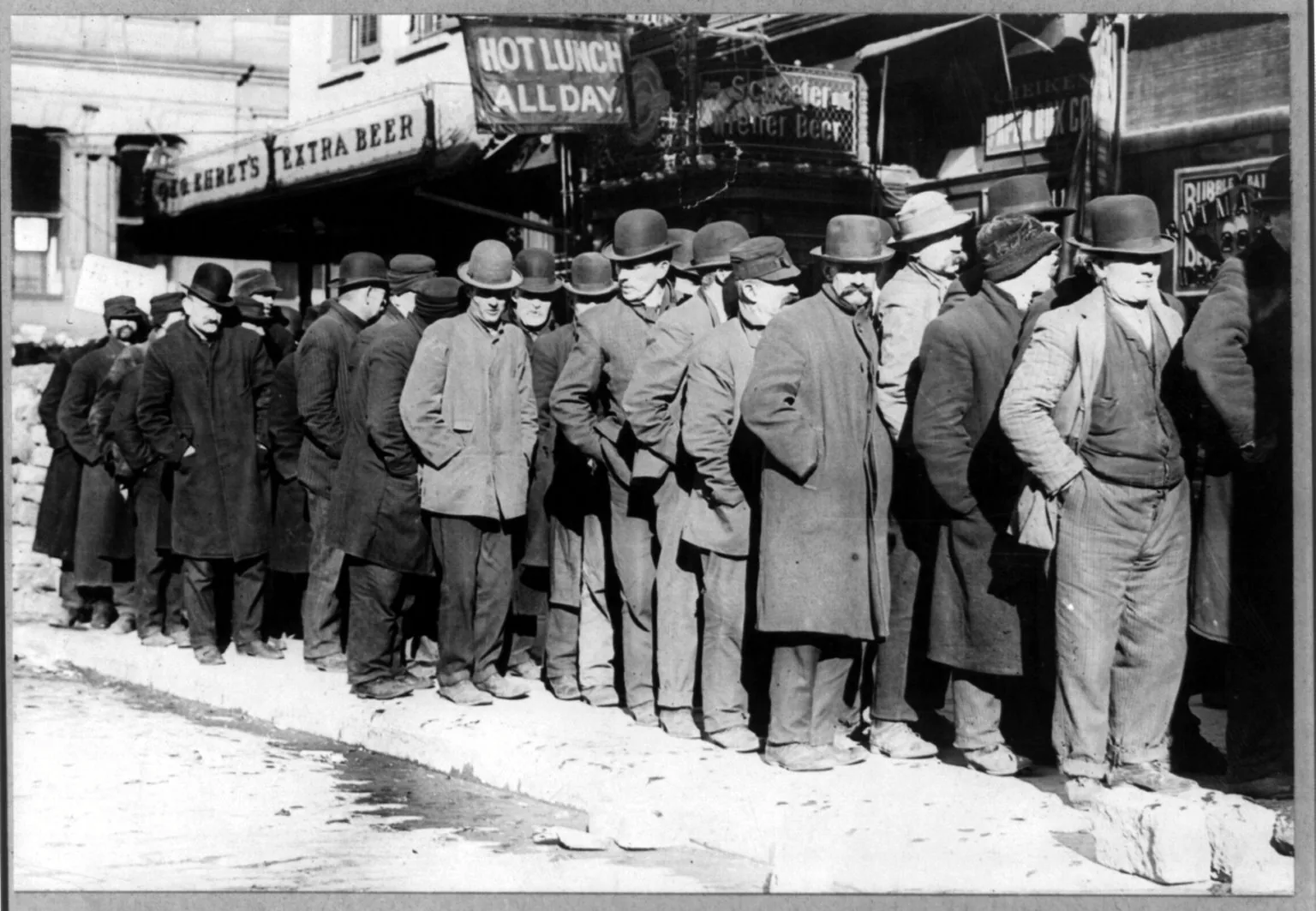
Across most of the United States, people wait in line. In New York, many of them wait on line. The line is the same. Only the preposition changes.
Merriam-Webster says waiting in line “is much more common than waiting on line, which is a phrase largely local to the New York City region.” Both, it adds, “communicate the same meaning.”
What the phrase means
“On line” means exactly what “in line” means: you are part of a queue, waiting your turn. The line in question is the one Merriam-Webster defines as “an arrangement or placement of persons or objects of one kind in an orderly series,” and the dictionary’s view is that “it really matters not at all whether you stand in it or on it.”

The difference is regional, not a matter of right and wrong. Merriam-Webster says the New York form “should not be considered as evidence of a lack of moral fiber, educational levels, or grammatical standards.”
It really matters not at all whether you stand in it or on it.
Where it is heard
Writers on usage have tied the phrase to New York for more than sixty years. Merriam-Webster traces the association to at least 1962, when Margaret Bryant covered the topic in Modern American Usage, and says that since then “on line” has been viewed as peculiar to New York City and the Hudson Valley.
Newspapers noticed as well. In 1977, Karen DeWitt of The Washington Post wrote of being in line, “or ‘on’ line as New Yorkers like to say.” In 1981, William Safire wrote in The New York Times that others “will have to get in line,” then added in parentheses that in New York it would be “on line.”
The clearest numbers come from the Harvard Dialect Survey, an online questionnaire run by the linguist Bert Vaux that closed in 2003. Question 93 asked people who stood “outside with a long line of people waiting to get in somewhere” whether they were standing “in line” or “on line.” Of 10,689 respondents, 88.3 percent chose “in line” and 5.5 percent chose “on line.” Another 5.4 percent said both sounded equally good.
Broken down by state, the answers shift sharply around New York. Among respondents in New York State, 57.3 percent chose “in line,” 23.7 percent chose “on line,” and 18.1 percent said both sounded equally good. In New Jersey, 17.4 percent chose “on line” and 25.6 percent said both. Next door the form nearly disappears: 3.4 percent chose “on line” in Connecticut and 1.5 percent in Pennsylvania. In California the figure was 0.6 percent.
Not only New York
“On line” is not confined to New York. Merriam-Webster has examples of wider use from the early twentieth century: in March 1917 the Fort Worth Star-Telegram described “the endless waiting on line for enough bread,” and two months later The Evening News of San Jose, California, wrote of being “crushed in a big crowd and waiting on line for a long time at the grounds.”
Today, in Merriam-Webster’s words, “on line” accounts for “but a small percentage of use” outside the New York region.
On line and online
The same two words carry other meanings. Merriam-Webster lists “on line” as a phrase meaning “in or into operation,” as in “bringing the new factory on line.” Its entry for the adjective online covers the computer sense: “connected to, served by, or available through a system and especially a computer or telecommunications system (such as the Internet).” The dictionary dates the first known use of that adjective to 1950.
The waiting sense was in print well before that. The dictionary’s newspaper examples of people waiting “on line” date from 1917, more than thirty years before the computer word.
It is still in use. Among Merriam-Webster’s current example sentences is one from a July 2026 Curbed story: “Teo Bugbee was on line with 20 or so other people outside a Bed-Stuy brownstone, waiting to get a look at what seemed like a unicorn apartment.”
The song
On Line
Dance-punk · 2:30
In the collection
 New York On Line The same queue. A different preposition. See On Line →
Sources
- Do you wait 'on line' or 'in line'? — Merriam-Webster
- Online (adjective); on line (phrase) — Merriam-Webster Dictionary
- Dialect Survey Results, Question 93 — Harvard Dialect Survey
- Dialect Survey Results: New York — Harvard Dialect Survey
- Dialect Survey Results: New Jersey — Harvard Dialect Survey
- Dialect Survey Results: Connecticut — Harvard Dialect Survey
- Dialect Survey Results: Pennsylvania — Harvard Dialect Survey
- Dialect Survey Results: California — Harvard Dialect Survey
- Notice — Harvard Dialect Survey
- Standing on line at the bubbler with a hoagie in my hand — Harvard Gazette
Images
- Opening photograph: Bain News Service (Library of Congress), Public domain, via Wikimedia Commons
- A line of men in coats and hats waiting on a sidewalk beneath a 'Hot Lunch All Day' sign.: Bain News Service (Library of Congress), Public domain, via Wikimedia Commons

