New York · Journal
Fourth Floor: William Labov's New York Department Store Study
In 1962 William Labov asked New York salespeople for directions to the fourth floor. How they said the r tracked the status of their store.

“Fourth floor” is an ordinary answer to an ordinary question. In November 1962 William Labov, then studying the speech of New York City, walked through three Manhattan department stores asking salespeople where to find something he already knew was on the fourth floor. What he wanted was the answer said out loud, and in particular the two r’s in it.
A question with a known answer
The sound Labov was tracking was the r after a vowel, in words like car, card, four and fourth. What he called “the r-less New York City pattern” dropped it. This r, he wrote, “appeared to be extraordinarily sensitive to any measure of social or stylistic stratification.”

The method was simple. In the role of a customer, he asked, “Excuse me, where are the women’s shoes?” The usual answer was “Fourth floor.” He then leaned forward and said, “Excuse me?” and usually heard the phrase again, this time spoken carefully, under emphatic stress. One exchange gave four chances to hear an r: before a consonant in fourth and at the end of floor, once casually and once with care. On the fourth floor itself, he asked, “Excuse me, what floor is this?”
After each exchange he moved along the aisle to a point just beyond the salesperson’s view and wrote down what he had heard. He conducted every interview himself, dressed in a jacket, white shirt and tie, and used his normal pronunciation as a college-educated native of New Jersey, which included the r.
Three stores, top to bottom
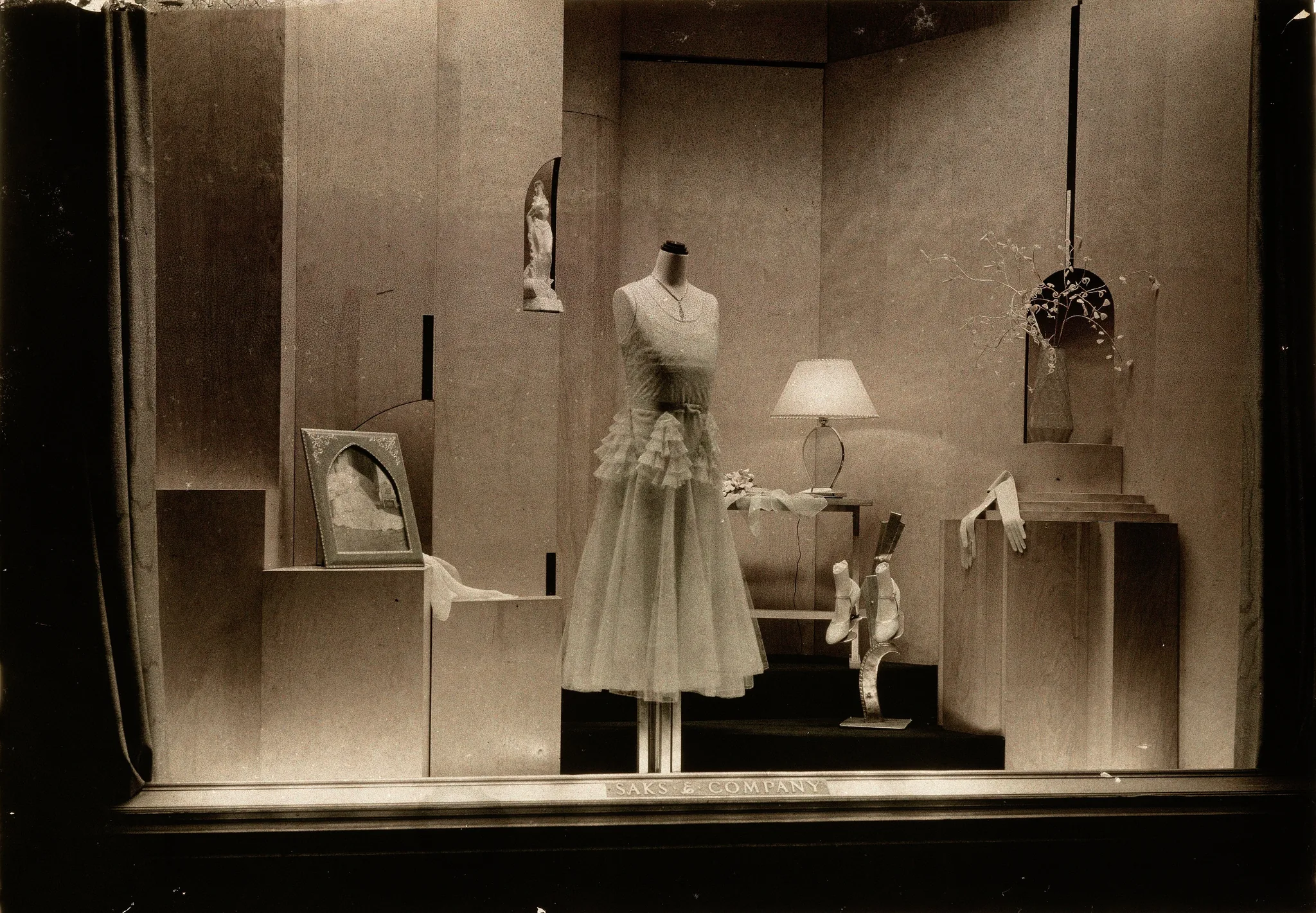
The stores were chosen from the top, middle and bottom of the price and fashion scale. Saks Fifth Avenue stood at 50th Street and Fifth Avenue. Macy’s was at Herald Square, 34th Street and Sixth Avenue. S. Klein was on Union Square, at 14th Street and Broadway.
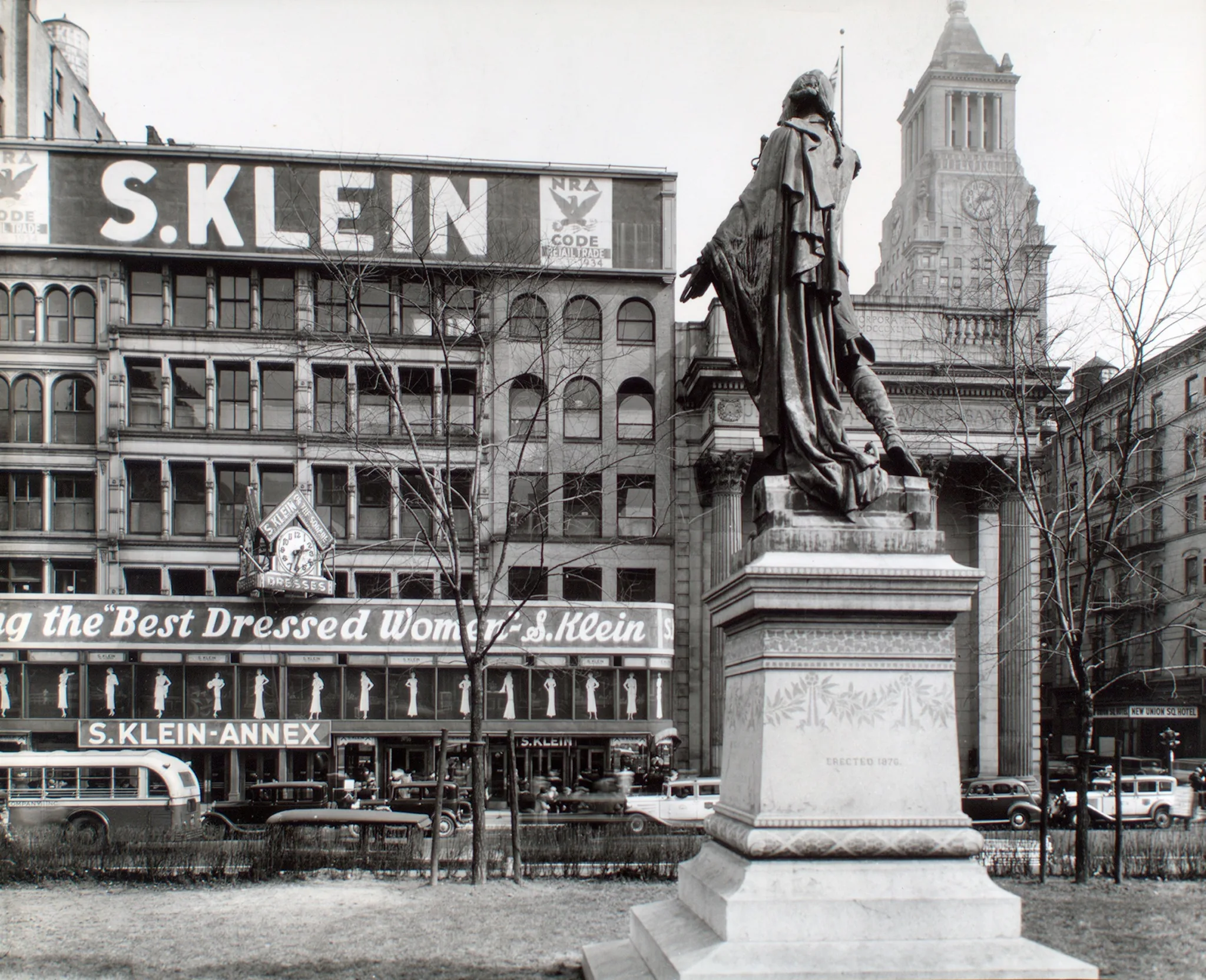
Labov documented the gap. Across four days of newspaper advertising in October 1962, the one item he could price at all three stores was a woman’s coat: $90.00 at Saks, $79.95 at Macy’s, $23.00 at Klein. Saks and Macy’s advertised in The New York Times. In the Daily News, Saks did not appear at all.
The employees themselves were at roughly the same level: a ranking by occupation, Labov noted, would put the staff of all three stores together. What separated them was the prestige of the store and its working conditions. His hypothesis was that even this fine a difference would show up in speech.
What the answers showed
He interviewed 68 employees at Saks, 125 at Macy’s and 71 at Klein, 264 people in about six and a half hours. Sixty-two percent of Saks employees pronounced the r at least some of the time, compared with 51 percent at Macy’s and 20 percent at Klein.
The careful repetition added a second finding. In floor, Macy’s employees pronounced the r 44 percent of the time in the casual answer and 61 percent in the emphatic one, close to the Saks figure of 64. At Saks the shift was much smaller, since the casual rate was already 63. Labov read the Macy’s result as a sign that r-pronunciation was “the norm at which a majority of Macy employees aim, yet not the one they use most often.” At Klein, the rate rose from 5 to 18 percent as the context became more emphatic. Some speakers in all three stores treated the r as the right sound for careful speech.
The pattern survived a stricter test. Among native New York white saleswomen alone, 141 people, the stratification was “essentially the same in direction and outline, though somewhat smaller in magnitude.”
Why the r carried status
The r had not always pointed upward. Labov cited evidence that it was absent from New York City speech in the 1930s, with an increase in records made after that. Before World War II, he wrote, the city’s schools were “dominated by an Anglophile tradition” that taught the r-less pronunciation as the correct one. By 1962 the r belonged to what Labov called “a new prestige pattern which is being superimposed upon the native New York City pattern.” At Saks, younger employees used more of it than older ones. At Macy’s the direction was reversed, and older employees used more.
For the salespeople, the exchange was, in Labov’s words, “a normal salesman-customer interaction, almost below the level of conscious attention.” The store results matched what his tape-recorded interviews on the Lower East Side showed, and he described the agreement as the ideal solution to what he called the Observer’s Paradox: “our goal is to observe the way people use language when they are not being observed.”
Our goal is to observe the way people use language when they are not being observed.
The book and the replications
The survey is a chapter of The Social Stratification of English in New York City, first published in 1966 by the Center for Applied Linguistics. Cambridge University Press published a second edition in 2006. In it, Labov wrote that of the year and a half he spent studying the city, “a day and a half was spent in the three department stores.” The study, he added, “has been replicated many times,” including “twice in NYC department stores,” and “with extraordinary fidelity.”
In 1986 Joy Fowler repeated it; her results are recorded in a New York University manuscript titled “The social stratification of (r) in New York City department stores, 24 years after Labov.” In June 2009 Patrick-André Mather of the University of Puerto Rico ran it again with 169 participants and published the results in the Journal of English Linguistics in 2012. The social, stylistic and word-position patterns were the same as before, with “significant increases in the overall percentages by some 10 to 20 percent.” One result differed: the 2009 data suggest that younger lower-middle-class speakers use the r-less form considerably less than older ones, contrary to Labov’s original survey.
The linguist
Labov was born in Passaic, New Jersey, graduated from Harvard in 1948 and worked as an industrial chemist in his family’s business from 1949 to 1961. He earned his PhD at Columbia in 1964, studying under Uriel Weinreich, and taught at the University of Pennsylvania from 1969 until he retired in 2014. He was president of the Linguistic Society of America in 1979. He died on December 17, 2024, from complications of Parkinson’s disease. He was 97.
The song
Fourth Floor
Broadway hip-hop · 2:30
On the map
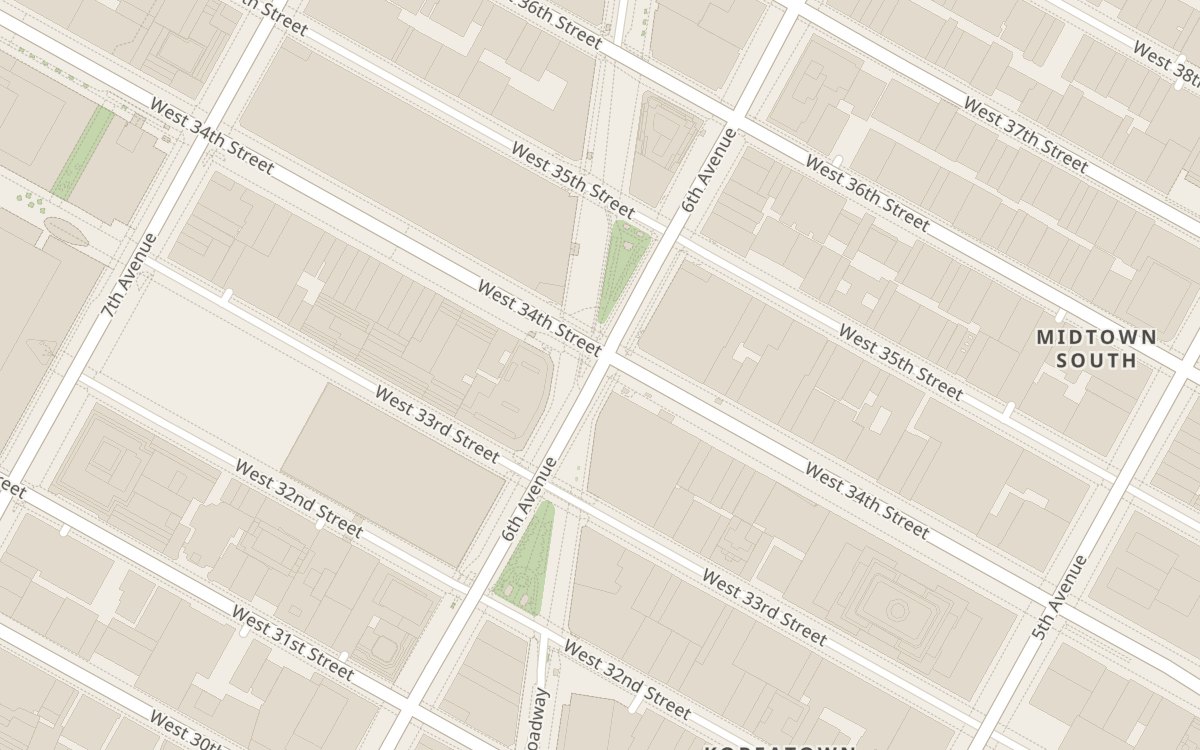
Herald Square, 34th Street and Sixth Avenue, Manhattan. Open The Atlas →
Map: OpenFreeMap · © OpenStreetMap contributors
In the collection
 New York Fourth Floor Fourth floor. Two words that revealed a city’s speech. See Fourth Floor →
Sources
- The Social Stratification of (r) in New York City Department Stores (from Sociolinguistic Patterns, 1972) — William Labov, copy hosted at the University of Pennsylvania
- The Social Stratification of (r) in New York City Department Stores (reprinted chapter) — William Labov, Stanford University course copy
- The social stratification of (r) in New York City department stores (Chapter 3) — Cambridge University Press
- The Social Stratification of English in New York City, 2nd edition — Cambridge University Press
- The Social Stratification of /r/ in New York City: Labov's Department Store Study Revisited — Journal of English Linguistics
- William Labov, Linguistics — University of Pennsylvania Almanac
- William 'Bill' Labov, 1979 LSA President — Linguistic Society of America
Images
- Opening photograph: Berenice Abbott (New York Public Library), Public domain, via Wikimedia Commons
- Black-and-white view of the S. Klein annex store on Union Square, with the back of the Lafayette statue in the foreground and the Consolidated Edison tower beyond.: Berenice Abbott (New York Public Library), Public domain, via Wikimedia Commons
- Autochrome of a Saks & Company shop window: a dress on a mannequin among gloves, a lamp and a framed picture on pale panelled stages.: Clifton R. Adams (Rijksmuseum), CC0, via Wikimedia Commons


