New York · Journal
Bacon, Egg and Cheese, Salt, Pepper, Ketchup: A New York Order
What goes into New York's bacon, egg and cheese, what SPK means at the counter, and the bodegas that sell it.

In New York, this breakfast sandwich is ordered by its contents. Bacon, egg and cheese is both the name and the recipe. Gothamist has called it “the city’s signature morning sandwich.” Reporting from Bronx bodegas in 2023, its reporters wrote: “A bacon, egg and cheese sandwich is as synonymous to New York City as the Big Apple itself.”
The order often has a second half. After the sandwich come three more words, said just as fast: salt, pepper, ketchup.
What goes in it
Gothamist’s description is exact: “two eggs, a discretionary amount of bacon and American cheese on a round Kaiser roll.” Bodega owners quoted in its survey work priced it two ways, on a roll or on a hero.

The Kaiser roll is a specific bread. The American Heritage Dictionary defines it as “a large roll with a hard crust, often used for sandwiches,” and gives the name as a translation of the German dialect word Kaisersemmel, from Kaiser and Semmel, a dialect word for roll. Amy Drew Thompson, a food reporter for the Orlando Sentinel whose old neighborhood bodega was in Rego Park, Queens, is firm about it: “It’s a must. The only way.”
The name has changed over time. Thompson remembers a shorter one: “It was just called an egg sandwich when I was growing up. You didn’t have to say bacon or cheese.” Later, she writes, it “became the bacon, egg and cheese. Or the B.E.C.” Gothamist’s coverage shortens it to BEC.
It was just called an egg sandwich when I was growing up. You didn't have to say bacon or cheese.
Salt, pepper, ketchup
The seasoning belongs to the order. Thompson writes: “You might say ‘salt, pepper, ketchup’ when you ordered it, quickly, all in one breath. Or ‘SPK.’” The counter can also ask first. She calls it “a quintessential New York call-and-response”: the customer says “Lemme get an egg sandwich…?” and “Salt, pepper, ketchup?” is “fired right back.”
The abbreviation now appears outside New York. In 2025 the Press Democrat explained BECSPK to readers in Sonoma County as “shorthand for ‘bacon, egg and cheese with salt, pepper and ketchup’ on a soft roll,” a breakfast “available at most neighborhood bodegas.” The story was about a chef, a Long Island native who “grew up with the BECSPK,” opening a breakfast spot there named SPK. In Tampa, Thompson found a food truck whose menu reads “BECSPK all one word.”
The bodega
The word is Spanish. The American Heritage Dictionary traces it to the Latin apothēca, storehouse, and NPR notes that in Spanish it “can mean ‘storeroom’ or ‘wine cellar.’” Gothamist dates its arrival in the city to when Spanish-speaking people “began arriving in New York in large numbers during the first half of the 20th Century.”
“Few places capture the essence of New York City like a bodega,” the Gothamist survey team wrote. Bodegas, they added, “alongside barbershops and laundromats, are trusted hubs where people can connect with their communities.”
NPR reported in 2017 that New York’s bodega culture “took shape in the 1940s and ’50s.” Carlos Sanabria, author of The Bodega: A Cornerstone of Puerto Rican Barrios, told NPR the New York bodega is still “closely associated with that first generation of entrepreneurs from Puerto Rico.” Since then, as NPR put it, “Many different ethnic groups have taken on the business model.”
The city has its own working definition. In a 2010 report on its Healthy Bodegas Initiative, launched in 2006, the city Health Department defined a bodega as a food store that has no more than two cash registers, sells mostly food without specializing in any one item, and sells milk. Delis sell the sandwich too; Gothamist’s 2025 report on egg prices described bodegas and delis alike struggling to keep it affordable.
A price index on a roll
The sandwich has also been used as an economic measure. In 2023, WNYC and Gothamist, working with the research institute Knology and the Bodega and Small Business Group, began surveying owners and customers at bodegas in the Bronx. The reporters called it “the bacon, egg and cheese indicator.”
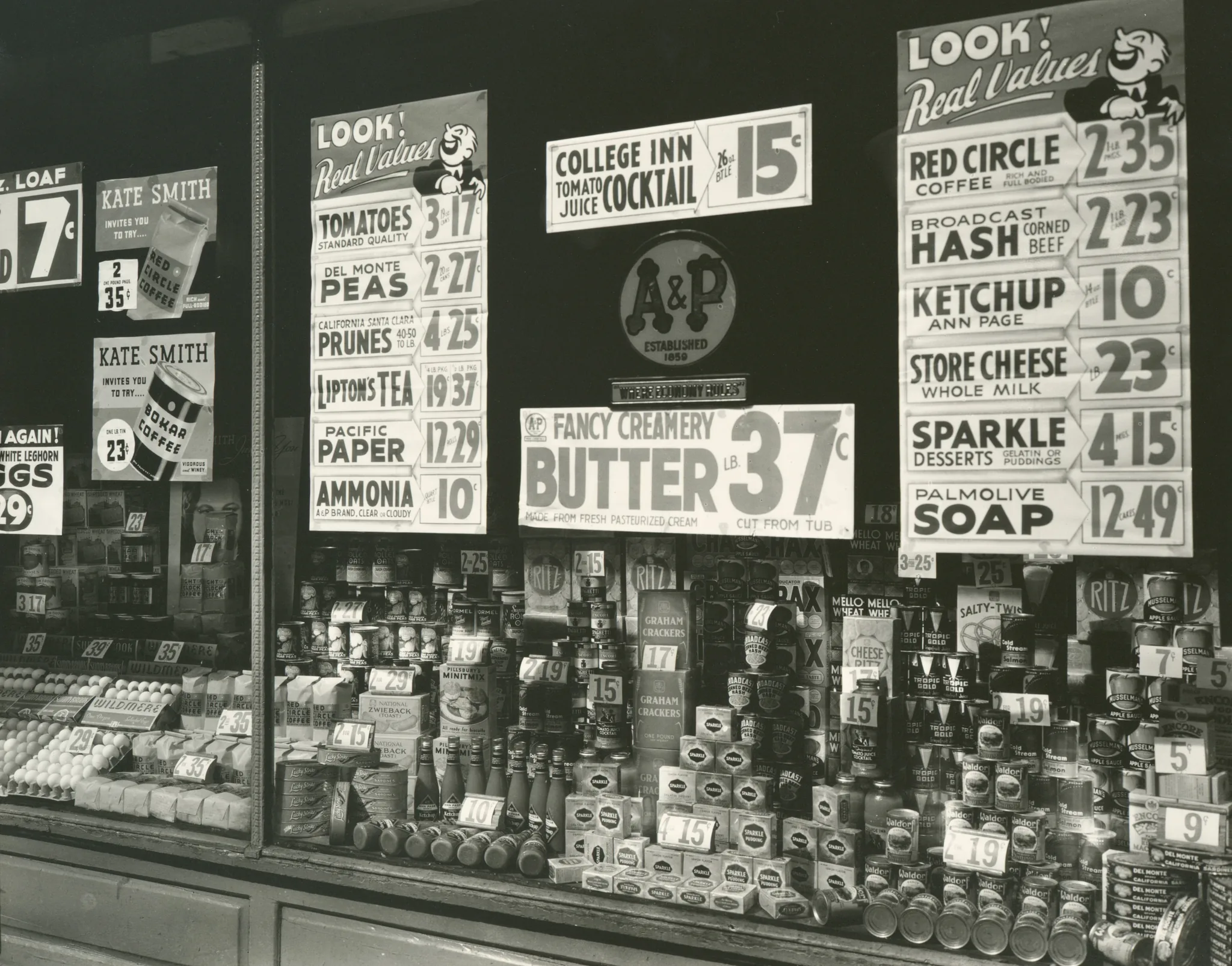
Bronx bodega owners told them the sandwich “used to cost between $1.99 and $3.50 for a roll” and had “almost doubled in price,” to between $4.50 and $6. In early 2025, with a bird flu outbreak driving up the cost of eggs, Gothamist found it selling for “around $4.50 to $6.50” depending on the neighborhood, with deli owners considering raising prices by at least 50 cents.
The song
BACONEGGANDCHEESE / Salt Pepper Ketchup
Latin house · boogaloo · 2:30
In the collection
 New York Baconeggandcheese Bacon, egg and cheese. Said in one breath. See Baconeggandcheese →
Sources
- Inflation, egg and cheese: Bird flu hits NYC's staple bodega sandwich — Gothamist
- Why bacon, egg and cheese prices have doubled and more convos in Bronx bodegas — Gothamist
- What Bronx bodegas are saying about trash pickup times and bacon, egg and cheese prices — Gothamist
- Bronx bodega survey: Bacon, egg and cheese prices remained high — Gothamist
- Ask A Native New Yorker: What's The Difference Between A Bodega, A Deli & Corner Grocer? — Gothamist
- This is not a drill — the BECSPK has landed in Orlando — Orlando Sentinel (via Yahoo)
- New York breakfast classic comes to Sonoma County — The Press Democrat
- kaiser roll — The American Heritage Dictionary of the English Language
- bodega — The American Heritage Dictionary of the English Language
- New York City Bodegas And The Generations Who Love Them — NPR
- New York City Healthy Bodegas Initiative 2010 Report — NYC Department of Health and Mental Hygiene
Images
- Opening photograph: spurekar, CC BY 2.0, via Wikimedia Commons
- A grocery store window filled with canned goods and hand-lettered price signs, including butter at 37 cents.: Berenice Abbott (New York Public Library), Public domain, via Wikimedia Commons

